1. Understanding the Regulatory Landscape: Why Compliance Matters More Than Ever
In today’s North American agricultural equipment market, compliance is no longer a secondary consideration—it is a defining factor in whether a brand can establish long-term credibility. The United States and Canada maintain some of the strictest environmental and safety regulations in the world, particularly for off-road diesel engines used in agricultural machinery. Among these, the standards set by the U.S. Environmental Protection Agency (EPA), especially Tier 4 emission regulations, have fundamentally reshaped how tractors are designed, manufactured, and marketed.
For manufacturers entering this market, meeting EPA requirements is not simply about certification; it represents a commitment to environmental responsibility, engineering maturity, and long-term product viability. Farmers and dealers alike are increasingly cautious about non-compliant equipment, as it can lead to operational risks, resale limitations, and potential legal complications.
LOVOL recognizes that regulatory compliance is the foundation of trust in North America. Rather than treating EPA standards as a barrier, the company views them as a strategic opportunity to align with global best practices. By investing in emission control technologies, fuel optimization, and cleaner engine platforms, LOVOL is actively positioning itself as a responsible and future-ready agricultural machinery provider.
In addition to EPA compliance, considerations such as safety certifications, documentation transparency, and parts traceability are becoming essential in dealer decision-making. This is especially important in a market where after-sales support and regulatory clarity often determine whether a product succeeds or fails. LOVOL’s approach emphasizes not just meeting the minimum requirements, but building a system that supports dealers and end users with confidence and clarity.
2. Engineering for Real-World Efficiency: Beyond Horsepower
While horsepower has traditionally been a primary benchmark for evaluating tractors, modern farmers in North America are increasingly focused on overall operational efficiency. This includes fuel consumption, ease of maintenance, adaptability to multiple implements, and long-term reliability under varying field conditions.
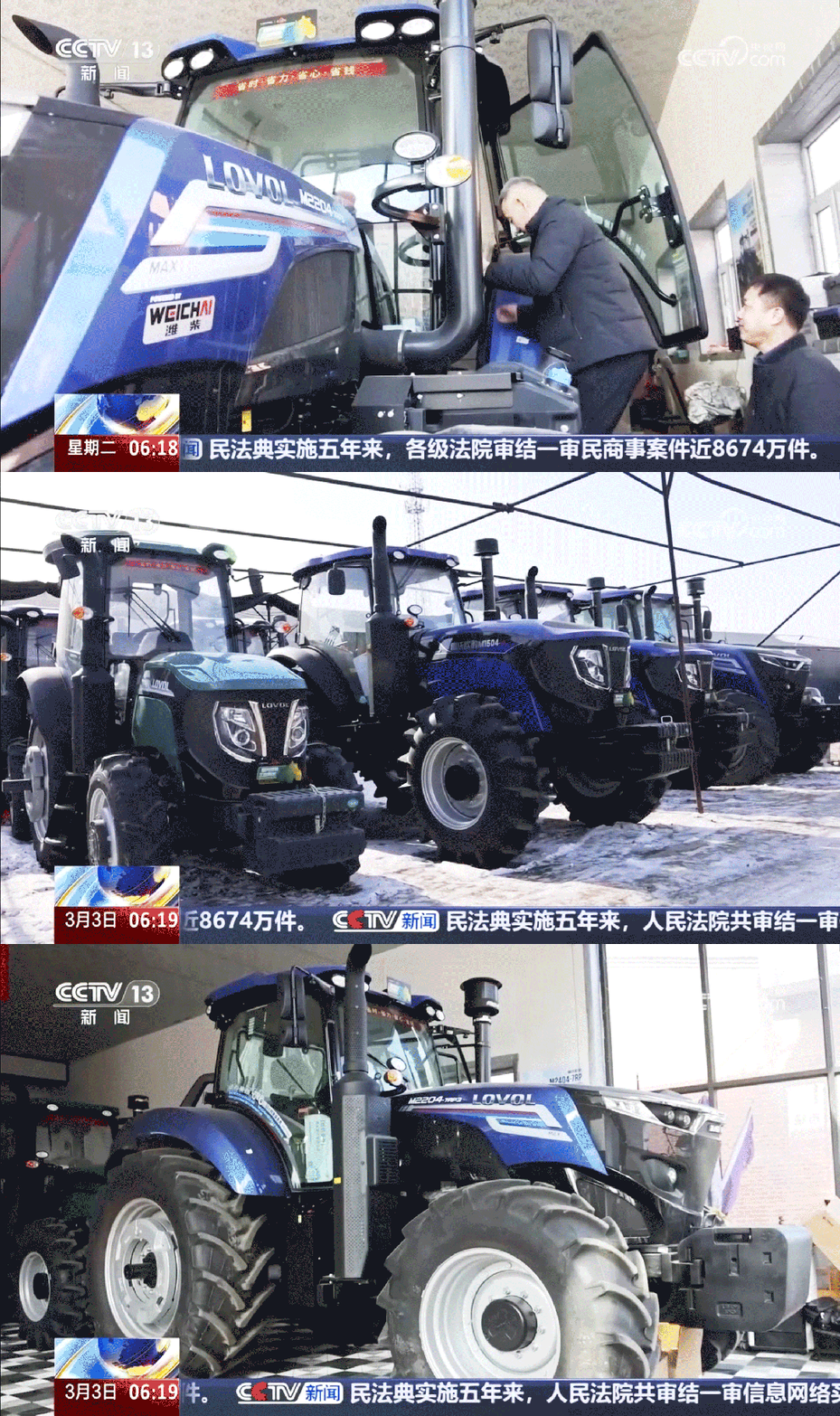
LOVOL tractors are engineered with a holistic understanding of these needs. Instead of focusing solely on peak performance metrics, the design philosophy centers on delivering consistent, usable power across a wide range of applications. Whether operating a front-end loader, powering a rotary cutter, or handling snow removal tasks in colder regions, LOVOL tractors are built to perform reliably without unnecessary complexity.
One of the key advantages lies in the balance between mechanical simplicity and functional capability. Many North American users, particularly small to mid-sized farm owners, prefer equipment that is easy to maintain without requiring highly specialized diagnostic tools. LOVOL addresses this by designing systems that are accessible, durable, and service-friendly, reducing downtime and lowering total cost of ownership.
Hydraulic performance, transmission smoothness, and implement compatibility are also critical factors. LOVOL tractors are equipped with robust hydraulic systems and standardized interfaces that allow seamless integration with commonly used implements in the North American market. This ensures that users can maximize productivity without worrying about compatibility issues or performance limitations.
Ultimately, efficiency is not just about doing more work—it is about doing it smarter, with fewer interruptions and lower operational costs. This is where LOVOL’s engineering approach delivers tangible value.
3. Closing the Gap: From Emerging Brand to Trusted Alternative
The North American tractor market has long been dominated by a handful of established brands with deep-rooted dealer networks and strong customer loyalty. For any new or expanding brand, entering this environment requires more than competitive pricing—it demands a clear value proposition and a commitment to long-term partnership.
LOVOL is steadily closing the gap by positioning itself as a practical and dependable alternative. Rather than attempting to compete directly at the premium end of the market, the brand focuses on delivering high-value solutions that meet the essential needs of farmers without excessive cost. This approach resonates particularly well with cost-conscious buyers, first-time tractor owners, and diversified operations seeking to optimize their equipment investments.
Trust, however, is not built overnight. Dealers and customers need assurance that a brand will remain consistent in product quality, parts availability, and technical support. LOVOL addresses this through continuous improvement in manufacturing standards, supply chain stability, and localized support strategies.
Another important aspect is transparency. In a market where concerns about “grey market” equipment and non-certified imports have created skepticism, LOVOL emphasizes clear positioning as a compliant and structured brand. By aligning with regulatory standards and strengthening its dealer network, the company aims to eliminate uncertainty and build confidence among stakeholders.
Over time, this combination of value, reliability, and transparency is helping LOVOL transition from an emerging player to a recognized and trusted option in the North American agricultural landscape.
4. The Road Ahead: Sustainability, Innovation, and Market Integration
As the agricultural industry continues to evolve, the expectations placed on equipment manufacturers are expanding beyond performance and compliance. Sustainability, digital integration, and adaptability to changing farming practices are becoming increasingly important.
LOVOL is actively exploring advancements in these areas, including improved fuel efficiency, smarter control systems, and potential integration with precision agriculture technologies. While the pace of adoption may vary across different segments of the market, the direction is clear: future tractors must be not only powerful and reliable, but also intelligent and environmentally responsible.
At the same time, market integration remains a key priority. Success in North America requires more than exporting products—it requires understanding local customer behavior, supporting dealer growth, and responding quickly to feedback from the field. LOVOL’s ongoing efforts to strengthen its presence in regions such as Canada and the United States reflect a long-term commitment rather than a short-term expansion strategy.
Looking ahead, the combination of regulatory alignment, practical engineering, and customer-focused development will play a crucial role in shaping LOVOL’s trajectory. As more farmers seek cost-effective yet compliant solutions, the opportunity for brands like LOVOL to establish a meaningful foothold continues to grow.