The North American tractor market is navigating a measured correction in 2026. After two years of elevated demand, farmers are pausing to reassess capital spending — yet beneath the headline declines, certain segments are holding firm, and long-term shifts are laying the groundwork for the next growth cycle.
Sales Trend: Decline Is Narrowing, Market Searching for a Floor
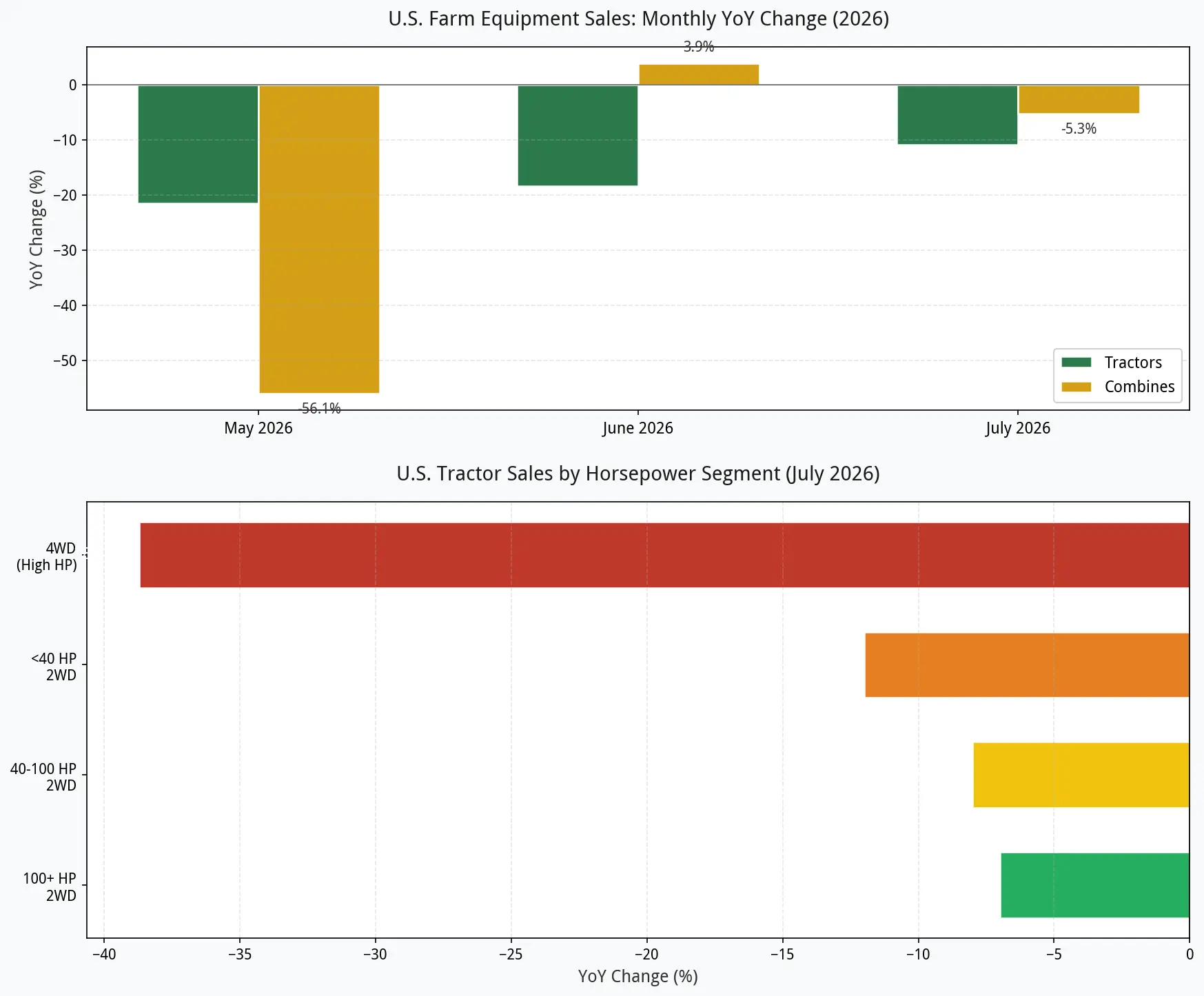
According to the Association of Equipment Manufacturers (AEM), U.S. tractor sales fell 10.9% in July 2026 to 15,985 units, while combines declined 5.3%. Canada saw tractor sales drop 7.8%.
However, the pace of decline is steadily moderating — from -21.6% in May to -18.4% in June to -10.9% in July — suggesting the market is working toward a bottom rather than entering freefall. A Q2 2026 Tractor Zoom survey found that roughly 60% of dealers expect the trough to arrive in late 2026 or early 2027.
The pain is concentrated in high-horsepower machines. In July, 4WD tractors plunged 38.7%, while smaller segments fared better: under-40-HP down 12%, 40–100 HP down 8%, and 100+ HP 2WD down just 7%.
The Bright Spot: Compact Tractors Outperforming the Market
While the overall market is down, one segment is rewriting the rules. In 2025, compact utility tractors outsold row-crop models for the first time in history — a structural milestone driven by the growing ranks of small-acreage owners, hobby farmers, landscapers, and specialty crop producers across North America.
These buyers don't need a 400-HP 4WD machine for 2,000 acres of corn. They need a 20–40 HP tractor that can mow, load, till, clear snow, and haul — and their purchasing decisions are driven by lifestyle and property maintenance, not commodity margins. As a result, compact demand has proven far more resilient to the farm-economy cycle.
The numbers confirm it. In July, the under-40-HP segment fell 12% — a decline, but far milder than the 38.7% plunge in 4WD tractors. And in the used market, under-40-HP machines lead all categories in price stability. For manufacturers and dealers, compact tractors are no longer an entry-level afterthought — they are the growth engine of the North American market.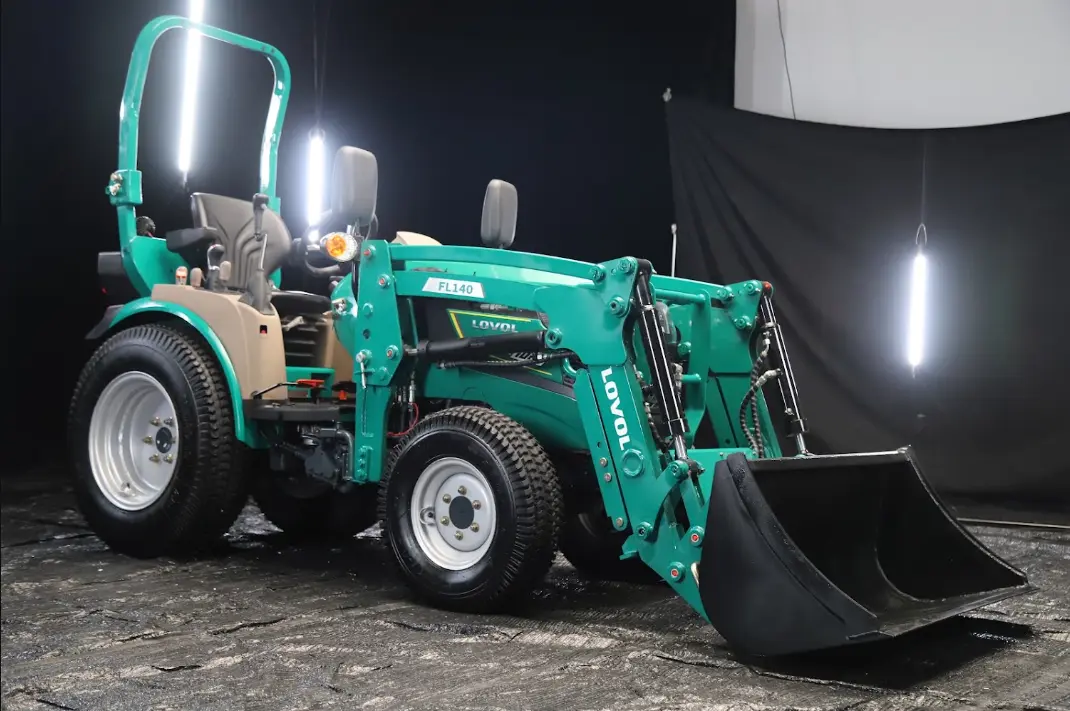
Looking Ahead: Electrification and Precision Agriculture Reshape the Future
Two transformative trends are accelerating in 2026. The first is electrification. The North American electric farm tractor market is projected to grow from $127.5 million in 2026 to $788.1 million by 2035 — a 22.4% CAGR, per Global Market Insights. EPA regulations and state incentive programs covering up to 75% of purchase price for low-emission equipment are rapidly closing the cost gap with diesel.
Early adoption is concentrated in smaller farms, Northeast dairy operations, and peri-urban areas where charging access and noise reduction make electrification immediately practical. As battery technology improves, electric tractors will move from niche to mainstream.
The second trend is precision agriculture. Over 61% of North American commercial farms now use GPS-enabled tractors with auto-steer. In April 2026, the USDA launched the National Proving Grounds Network for AgTech (NPG-Ag) to accelerate real-world validation of autonomy, sensing, and connected implements — meaning today's premium precision features will become tomorrow's baseline expectations.
The broader North American tractor market was valued at $36.45 billion in 2026** and is projected to reach **$44.64 billion by 2031 (4.14% CAGR), with the U.S. accounting for roughly 79% of regional demand and over 4.8 million tractors currently in service.